
Maps
Landmark Map

Landmark locality map for Jasper County, Missouri
Map created 15 April 2026.
 | Interstate Highway |  | Railroad |  | US Army Corps of Engineers |
 | US Highway |  | Department of Conservation |  | US Fish and Wildlife Service |
 | State Highway |  | Department of Natural Resources |  | National Park Service |
 | County Highway |  | US Forest Service |  | US Department of Defense |
Locator Map
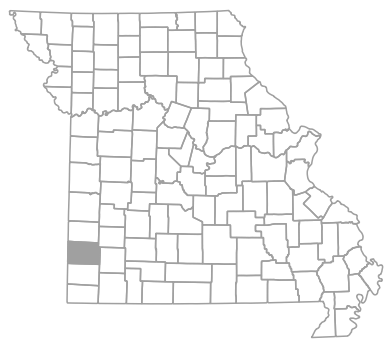
Locator map for Jasper County, Missouri
Map created 15 April 2026.
Natural Divisions Locality Map
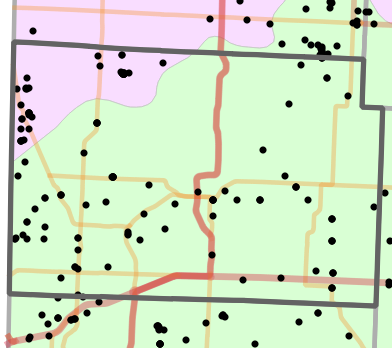
Natural Divisions locality map for Jasper County, Missouri
Map created 15 April 2026.
Ecological Drainage Unit Locality Map
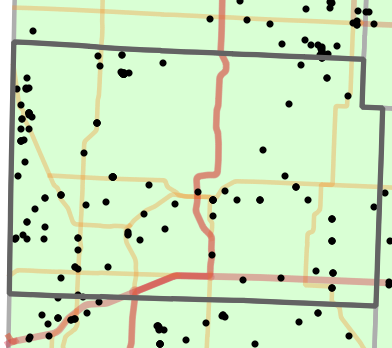
Ecological Drainage Units locality map for Jasper County, Missouri
Map created 15 April 2026.
Major Watersheds Locality Map
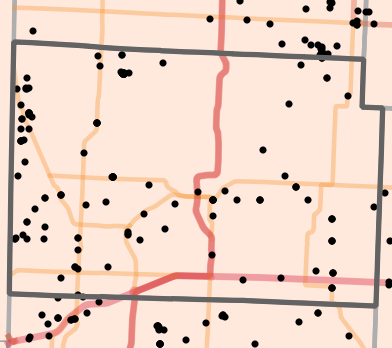
Major Watersheds locality map for Jasper County, Missouri
Map created 15 April 2026.
Major Rivers Locality Map
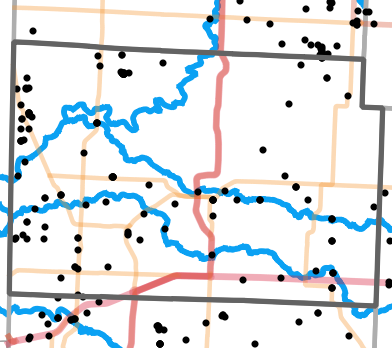
Major Rivers locality map for Jasper County, Missouri
Map created 15 April 2026.
Level I Ecoregion Locality Map
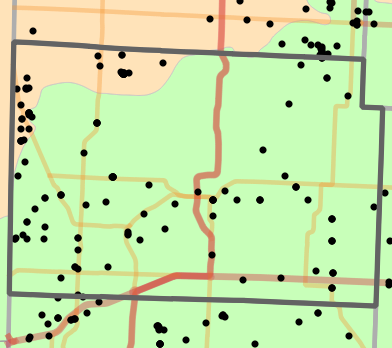
Level I Ecoregion locality map for Jasper County, Missouri
Map created 15 April 2026.
Level II Ecoregion Locality Map
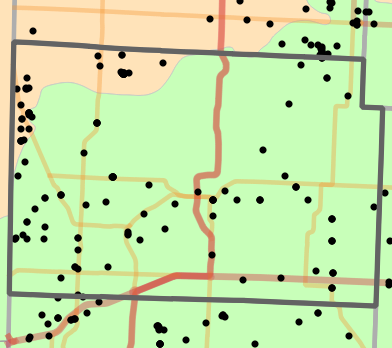
Level II Ecoregion locality map for Jasper County, Missouri
Map created 15 April 2026.
Level III Ecoregion Locality Map
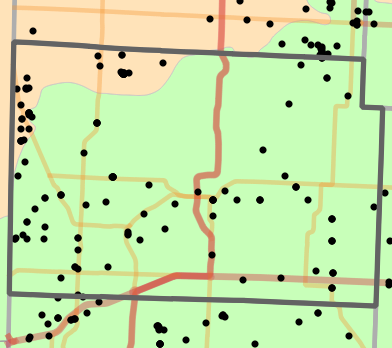
Level III Ecoregion locality map for Jasper County, Missouri
Map created 15 April 2026.
Level IV Ecoregion Locality Map
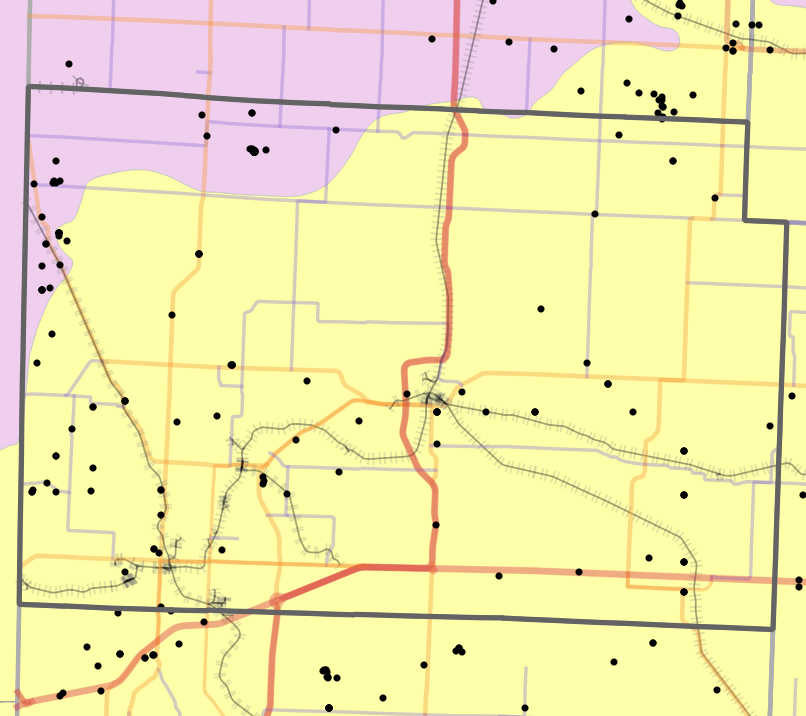
Level IV Ecoregion locality map for Jasper County, Missouri
Map created 15 April 2026.
Presettlement Prairie Locality Map
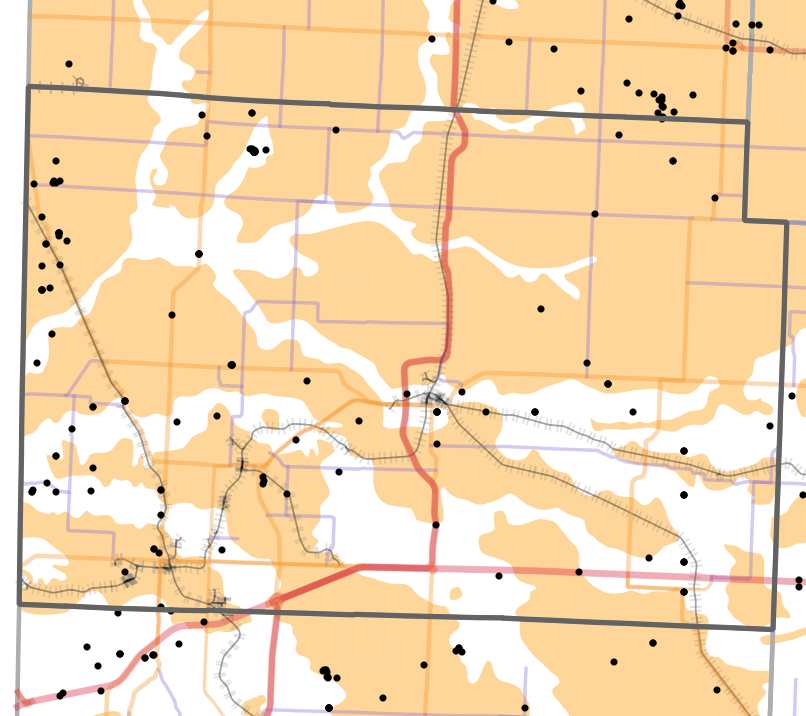
Presettlement Prairie locality map for Jasper County, Missouri
Map created 15 April 2026.
Historical Vegetation Map

Historical Vegetation map for Jasper County, Missouri
Map created 15 April 2026.
 | Water |  | Prairie |  | Barrens / Scrub |
 | Forest |  | Woodland |  | Open Woodland |
Geology Locality Map

Geology locality map for Jasper County, Missouri
Map created 15 April 2026.
 | Alluvium |  | Sandstone |  | Dolomite |  | Limestone |
 | Clay |  | Sandstone / Limestone |  | Dolomite / Limestone |  | Limestone / Sandstone |
 | Igneous |  | Sandstone / Dolomite |  | Dolomite / Shale |  | Limestone / Shale |
 | Limestone / Sandstone / Shale |
Species List
Salamanders (Caudata)
- Ambystoma texanum (Matthes, 1855) - Small-mouthed Salamander
- Necturus louisianensis Viosca, 1938 - Red River Mudpuppy
- Eurycea longicauda (Green, 1818) - Long-tailed Salamander
- Eurycea lucifuga Rafinesque, 1822 - Cave Salamander
- Eurycea spelaea (Stejneger, 1892) - Western Grotto Salamander
Frogs (Anura)
- Anaxyrus americanus (Holbrook, 1836) - American Toad
- Acris blanchardi Harper, 1947 - Blanchard's Cricket Frog
- Dryophytes chrysoscelis (Cope, 1880) - Cope's Gray Treefrog
- Dryophytes cinereus (Schneider, 1799) - Green Treefrog
- Dryophytes versicolor (LeConte, 1825) - Gray Treefrog
- Pseudacris crucifer (Wied-Neuwied, 1838) - Spring Peeper
- Pseudacris maculata (Agassiz, 1850) - Boreal Chorus Frog
- Lithobates areolatus (Baird and Girard, 1852) - Northern Crawfish Frog
- Lithobates blairi (Mecham, Littlejohn, Oldham, Brown, and Brown, 1973) - Plains Leopard Frog
- Lithobates catesbeianus (Shaw, 1802) - North American Bullfrog
- Lithobates palustris (LeConte, 1825) - Pickerel Frog
- Lithobates sphenocephalus (Cope, 1886) - Coastal Plains Leopard Frog
- Gastrophryne carolinensis (Holbrook, 1835) - Eastern Narrow-mouthed Toad
Lizards (Squamata, "Lizards")
- Sceloporus consobrinus Baird and Girard, 1853 - Prairie Lizard
- Aspidoscelis sexlineatus (Linnaeus, 1766) - Prairie Racerunner
- Plestiodon fasciatus (Linnaeus, 1758) - Common Five-lined Skink
- Plestiodon laticeps (Schneider, 1801) - Broad-headed Skink
- Scincella lateralis (Say in James, 1822) - Little Brown Skink
- Ophisaurus attenuatus Baird in Cope, 1880 - Western Slender Glass Lizard
- Podarcis siculus (Rafinesque, 1810) - Italian Wall Lizard 1
Snakes (Squamata, "Snakes")
- Coluber constrictor Linnaeus, 1758 - North American Racer
- Lampropeltis calligaster (Harlan, 1827) - Prairie Kingsnake
- Lampropeltis holbrooki Stejneger, 1902 - Speckled Kingsnake
- Lampropeltis triangulum (Lacépède, 1789) - Eastern Milksnake
- Masticophis flagellum (Shaw, 1802) - Eastern Coachwhip
- Opheodrys aestivus (Linnaeus, 1766) - Northern Rough Greensnake
- Pantherophis obsoletus (Say in James, 1822) - Western Ratsnake
- Pituophis catenifer (Blainville, 1835) - Bullsnake
- Tantilla gracilis Baird and Girard, 1853 - Flat-headed Snake
- Carphophis vermis (Kennicott, 1859) - Western Wormsnake
- Diadophis punctatus (Linnaeus, 1766) - Ring-necked Snake
- Nerodia erythrogaster (Forster, 1771) - Yellow-bellied Watersnake
- Nerodia rhombifer (Hallowell, 1852) - Northern Diamond-backed Watersnake
- Nerodia sipedon (Linnaeus, 1758) - Common Watersnake
- Regina grahamii Baird and Girard, 1853 - Graham's Crawfish Snake
- Storeria dekayi (Holbrook, 1839) - DeKay's Brownsnake
- Thamnophis proximus (Say in James, 1822) - Orange-striped Ribbonsnake
- Thamnophis sirtalis (Linnaeus, 1758) - Common Gartersnake
- Virginia striatula (Linnaeus, 1766) - Rough Earthsnake
- Agkistrodon contortrix (Linnaeus, 1766) - Eastern Copperhead
Turtles (Testudines)
- Chelydra serpentina (Linnaeus, 1758) - North American Snapping Turtle
- Kinosternon flavescens (Agassiz, 1857) - Yellow Mud Turtle
- Sternotherus odoratus (Latreille in Sonnini and Latreille, 1801) - Eastern Musk Turtle
- Chrysemys picta (Schneider, 1783) - Western Painted Turtle
- Graptemys geographica (LeSueur, 1817) - Northern Map Turtle
- Graptemys ouachitensis Cagle, 1953 - Ouachita Map Turtle
- Pseudemys concinna (LeConte, 1830) - Eastern River Cooter
- Terrapene ornata (Agassiz, 1857) - Ornate Box Turtle
- Terrapene triunguis (Agassiz, 1857) - Three-toed Box Turtle
- Trachemys scripta (Thunberg in Schoepff, 1792) - Red-eared Slider
- Apalone spinifera (LeSueur, 1827) - Northern Spiny Softshell
Collection Summary
Jasper County has a total of 250 valid, non-duplicated collections representing 56 species and 108 localities. There are a total of 50 collectors and 105 collection dates for the county. This results in a total of 117 expeditions for the county, a measure of unique date / collector(s) combinations. The county's earliest collection year is 1899 and its most recent collection year is 2024. The earliest and latest collection dates (independent of earliest and most recent collection years) are March 2 and November 1, respectively. If you have a new record to report for Jasper County, read the New Records section of the FAQ.
Collection Summary by Species

Potential Species Records
| Likelihood | Species | Common Name | Rationale | Ecoregion / Watershed | |
|---|---|---|---|---|---|
 | 2 | Ambystoma tigrinum | Eastern Tiger Salamander | Same Level IV ecoregion, within 5 miles | Springfield Plateau |
| 2 | Crotaphytus collaris | Eastern Collared Lizard | Same Level IV ecoregion, within 5 miles | Springfield Plateau |
| 2 | Hemidactylus turcicus 1 | Mediterranean Gecko | Same Level IV ecoregion, within 5 miles | Springfield Plateau |
| 2 | Notophthalmus viridescens | Central Newt | Same Level IV ecoregion, within 5 miles | Springfield Plateau |
| 2 | Plestiodon anthracinus | Southern Coal Skink | Same Level IV ecoregion, within 5 miles | Springfield Plateau |
| 2 | Plestiodon obsoletus | Great Plains Skink | Same Level IV ecoregion, within 5 miles | Springfield Plateau |
| 2 | Virginia valeriae | Western Smooth Earthsnake | Same Level IV ecoregion, within 5 miles | Springfield Plateau |
| 4 | Pantherophis emoryi | Great Plains Ratsnake | Same Level IV ecoregion, within 10 miles | Cherokee Plains |
 | 6 | Ambystoma maculatum | Spotted Salamander | Same Level IV ecoregion, within 20 miles | Springfield Plateau |
| 6 | Anaxyrus fowleri | Fowler's Toad | Same Level IV ecoregion, within 20 miles | Springfield Plateau |
| 6 | Crotalus horridus | Timber Rattlesnake | Same Level IV ecoregion, within 20 miles | Springfield Plateau |
| 6 | Eurycea tynerensis | Oklahoma Salamander | Same Level IV ecoregion, within 20 miles | Springfield Plateau |
| 6 | Heterodon platirhinos | Eastern Hog-nosed Snake | Same Level IV ecoregion, within 20 miles | Springfield Plateau |
| 6 | Lithobates clamitans | North American Green Frog | Same Level IV ecoregion, within 20 miles | Springfield Plateau |
| 6 | Plestiodon septentrionalis | Prairie Skink | Same Level IV ecoregion, within 20 miles | Cherokee Plains |
| 6 | Plethodon albagula | Western Slimy Salamander | Same Level IV ecoregion, within 20 miles | Springfield Plateau |
| 6 | Storeria occipitomaculata | Red-bellied Snake | Same Level IV ecoregion, within 20 miles | Springfield Plateau |
| 6 | Tropidoclonion lineatum | Lined Snake | Same Level IV ecoregion, within 20 miles | Cherokee Plains |
 | 8 | Eurycea nerea | Northern Grotto Salamander | Same Level IV ecoregion, within 30 miles | Springfield Plateau |
| 8 | Lithobates sylvaticus | Wood Frog | Same Level IV ecoregion, within 30 miles | Springfield Plateau |
| 8 | Phrynosoma cornutum | Texas Horned Lizard | Same Level IV ecoregion, within 30 miles | Cherokee Plains |
| 9 | Plethodon angusticlavius | Ozark Zigzag Salamander | Same Level III ecoregion, within 30 miles | Ozark Highlands |
Checklist
All MOHAP publications are released in portable document format (PDF), an ISO standard. You must download and install a reader (click icon below) to view these documents. A state checklist, including all counties, is available on the publications page.

 Daniel, R.E., B.S. Edmond, and J.T. Briggler. 2026. Checklist of Jasper County Missouri Amphibians and Reptiles for 2025. <http://atlas.moherp.org/county/Jasper>
- Daniel, R.E., B.S. Edmond, and J.T. Briggler. 2026. Checklist of Jasper County Missouri Amphibians and Reptiles for 2025. <http://atlas.moherp.org/county/Jasper> (with common names)
Notes
1 This species is not native to Missouri. Thus far, non-native reptiles in Missouri have only been found in urban areas and do not appear to constitute a threat to our native herpetofauna. This is not the case everywhere and non-native species that become invasive are considered by many biologists to be a major threat, second only to habitat loss, to our native species. Care should be taken to prevent the spread of this and all non-native species. Furthermore, it is illegal to release non-native species into the environment.